Age Related Hearing Changes and When to Get Help
The first sign is often not silence. It is asking your spouse to repeat a sentence during dinner, hearing the television clearly only when it is louder than everyone else prefers, or smiling along in a busy restaurant because the conversation has become difficult to follow. Age related hearing changes usually happen gradually, which is why many people adjust to them without realizing how much effort listening has begun to take.
This is common, and it is nothing to feel embarrassed about. A hearing assessment offers clear answers and a practical path forward, whether the changes are mild or are starting to affect family life, confidence, and independence.
What age related hearing changes feel like
Age-related hearing loss, sometimes called presbycusis, develops as the delicate parts of the inner ear change over time. It often affects both ears and commonly makes higher-pitched sounds harder to hear. That matters because many speech sounds, including "s," "f," "th," and "sh," are high in pitch. You may hear that someone is talking but miss the words that make a sentence clear.
This is why people often describe speech as muffled or unclear rather than simply quiet. Turning up the volume may help a little, but volume alone cannot always restore clarity, especially where there is background noise.
The experience varies from person to person. Some people notice difficulty hearing grandchildren or female voices first. Others struggle most in meetings, food courts, family gatherings, places of worship, or while riding in a car. A quiet one-to-one conversation may still feel easy, so it is possible to have hearing loss even if you can hear well in certain settings.
Everyday signs worth paying attention to
Consider a professional hearing check if you or someone close to you notices several of these changes:
Conversations are clear in quiet rooms but difficult in groups or noisy places.
The TV, phone, or videos need to be louder than before.
You frequently ask people to repeat themselves or misunderstand words.
You miss doorbells, alarms, approaching vehicles, or someone calling from another room.
Social gatherings feel tiring, frustrating, or easier to avoid.
Family members are often the first to notice. They may see a loved one withdrawing from conversation, answering a different question, or becoming upset when others speak too quickly. These moments are rarely about a lack of attention. They can be signs that the brain is working much harder to make sense of incomplete sound.
Why hearing changes deserve timely attention
Hearing supports far more than conversation. It helps us notice safety cues, participate in work and community life, and feel present with the people we love. When listening becomes difficult, many people begin avoiding the situations that once brought them joy. Over time, that isolation can affect mood, confidence, and relationships.
There is also a growing body of research linking untreated hearing loss with a higher risk of cognitive decline and dementia. Hearing loss does not mean someone will develop dementia, and treating hearing loss cannot promise to prevent it. However, protecting communication, social connection, and mental stimulation is a meaningful part of supporting long-term brain health.
Early care can be simpler than people expect. Mild hearing changes may be manageable with communication strategies and regular monitoring. When hearing aids are appropriate, starting before communication has become severely limited can help people stay engaged in the activities and relationships that matter most.
Why the hearing test matters
It is tempting to assume that all difficulty hearing is caused by age. But hearing changes can also be influenced by earwax, noise exposure, certain medications, middle-ear concerns, infections, or other health conditions. A proper assessment helps separate assumptions from answers.
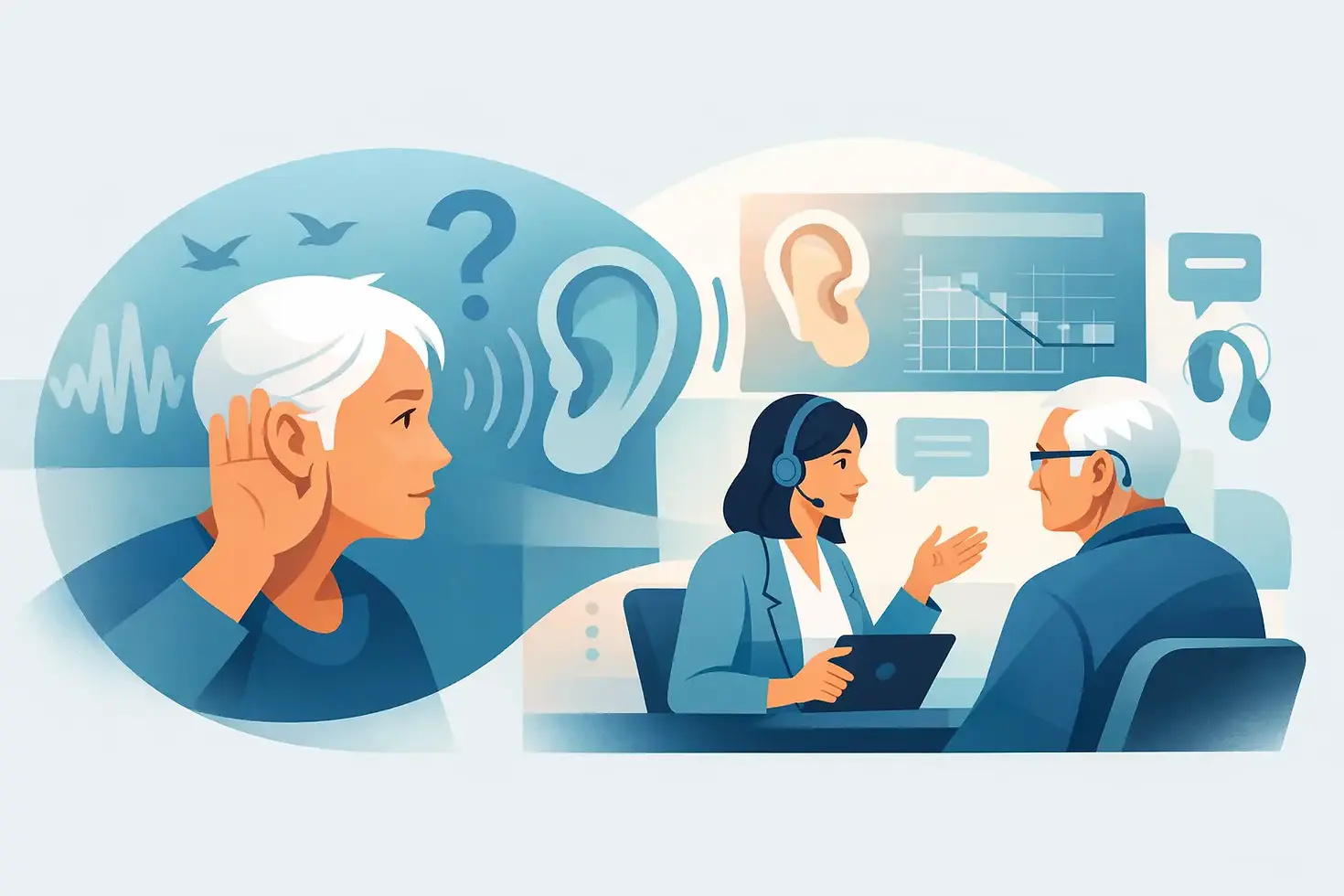
Pure-Tone Audiometry, often shortened to PTA, is a straightforward test used to check the softest sounds you can hear at different pitches. During the assessment, you listen through headphones and respond when you hear a tone. The results create an audiogram, which shows whether hearing loss is present and helps identify its type and degree.
The appointment should also include a conversation about your daily listening situations. Do you struggle at restaurants? Do you miss your phone ringing? Are family members concerned? A hearing solution should fit real life, not just a test result.
A gentle assessment is especially helpful for people who feel nervous about being tested or worry that a hearing aid will be pushed on them. The purpose of testing is to understand your hearing first. Sometimes reassurance, monitoring, ear care, or a medical referral is the right next step.
Hearing aids are not one-size-fits-all
Today’s hearing aids can be small, discreet, and designed to make speech clearer while reducing distracting background noise. Still, the best choice depends on more than appearance. Your hearing levels, finger dexterity, vision, lifestyle, comfort preferences, and budget all matter.
For example, a compact device may be appealing for its subtle appearance, while a slightly larger style may be easier to handle and may offer more power or longer battery life. Basic technology can provide helpful amplification for quieter settings. More advanced options may better support speech understanding in changing or noisy environments. There is no single “best” hearing aid, only the option that best supports your needs.
Equally important is the fitting. Hearing aids need to be calibrated to your hearing profile and adjusted based on your real experiences. If your own voice sounds unusual, the kitchen feels too loud, or conversation is still unclear in a familiar café, those details guide fine-tuning. Ongoing aftercare is part of good hearing care, not an extra.
Helping a parent or partner take the first step
If you are worried about a loved one, lead with care rather than correction. Saying, “You never listen,” can make someone feel blamed. Try, “I’ve noticed conversations seem tiring for you. I miss chatting comfortably too. Would you be open to getting your hearing checked together?”
Choose a calm moment, not the middle of a misunderstanding. Be specific about what you have noticed, such as missed calls, extra TV volume, or avoiding family meals. Framing an assessment as a health check, rather than a judgment or a commitment to buy hearing aids, can reduce anxiety.
It also helps to respect independence. The decision belongs to the person experiencing the hearing changes. Your role is to make the path feel supported, practical, and dignified. For someone with mobility challenges or a busy caregiving schedule, asking about home-visit assessment options may make care more accessible.
Small changes that make conversations easier now
While waiting for an assessment, a few habits can reduce strain. Face the person when speaking so they can see your expressions. Get their attention before beginning a conversation, reduce competing noise when possible, and speak clearly at a natural pace. Shouting can distort speech and may feel uncomfortable, so clarity is more useful than volume.
In restaurants or group settings, choose a quieter table away from speakers and kitchens. Ask one person to speak at a time when possible. These adjustments do not replace hearing care, but they can make family time feel less exhausting.
A clearer next step
Gradual hearing changes can quietly shrink a person’s world, but they do not have to. A professional hearing assessment can identify what is happening, explain the options in plain language, and help you make a decision without pressure.
At Sunshine Hearing, the goal is not simply to make sounds louder. It is to help people hear conversations with less effort, stay connected to the people around them, and continue living with confidence. Booking a hearing assessment can be a small act of care that makes room for more shared stories, easier laughter, and meaningful moments with family.


Comments